Why our sourdough takes its time
Our sourdough earns its flavor, open crumb, and crisp crust through a slow ferment that begins long before breakfast.

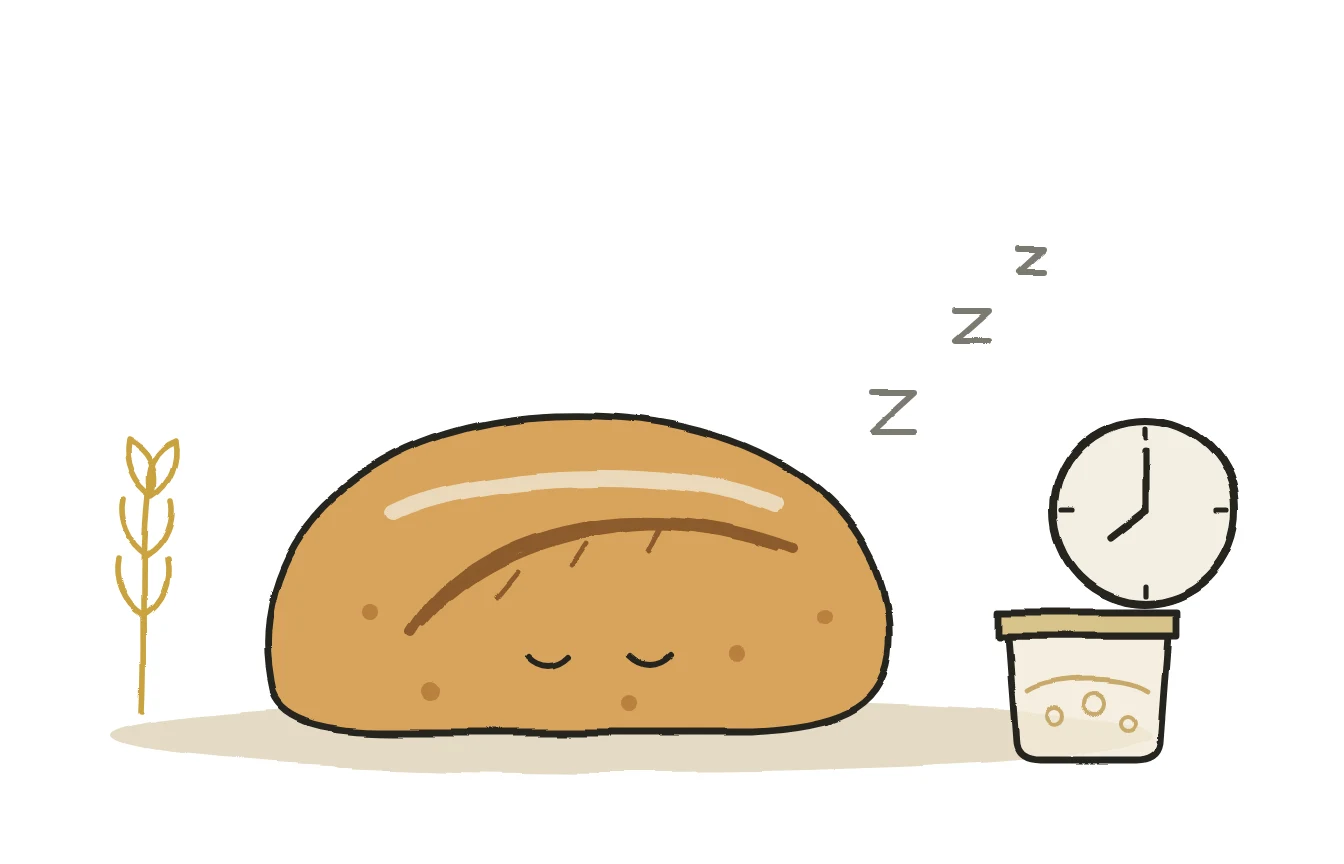
Our sourdough starts the day before you eat it. The starter is fed, the dough is mixed, and then time takes over. There are things we can guide with our hands, but the clock remains stubbornly in charge.
That is good news for the bread.
A sourdough starter is a living culture of wild yeast and bacteria. Feeding it gives those tiny workers fresh flour and water, along with enough time to become active. We watch for bubbles, lift, and that pleasantly tangy smell that tells us the starter is ready.
Then we mix the dough. Flour, water, salt, and starter come together into something shaggy and not especially impressive. It needs a little faith at this stage. It also needs rest, which is often more useful than fussing.
During bulk fermentation, the dough begins to rise as the starter produces gas. The gluten network strengthens and stretches, holding those bubbles inside. We fold the dough along the way, gently building structure without pressing out all the life we have waited for.
This stage cannot be reduced to a timer alone. Temperature matters. The activity of the starter matters. Even the feel of the dough beneath our fingers matters, so we pay attention and let it tell us when it is ready.
Once bulk fermentation is complete, we shape each loaf. Shaping creates tension across the surface, helping the dough rise with intention instead of relaxing into a very delicious puddle. Easy there, bread. We have plans for you.
The shaped loaves go into a cold overnight proof. This is the long pause at the center of the process. The refrigerator slows fermentation without stopping it, giving flavor more time to develop while the dough settles into its final form.
What does that extra time actually do? It allows the acids and aromatic compounds produced during fermentation to become more complex. The loaf develops a gentle tang, a fuller wheat flavor, and the kind of finish that keeps revealing itself after the first bite.
The cold proof also helps create the texture we want. Given enough fermentation and careful handling, the dough can bake into an open crumb with irregular pockets rather than a tight, uniform interior. The crust becomes deeply browned and crisp, while the center stays tender and pleasantly chewy.
Long fermentation also gives the culture more time to work on the flour’s starches and proteins. Some people find traditionally fermented bread easier to enjoy than quickly made loaves, though every person and every digestion is different. We do not make health promises about bread. We simply give fermentation room to do what it has always done.
In the morning, the loaves are scored and baked. The cut across the surface gives expanding steam and gas a place to go, encouraging a strong rise in the oven. Heat turns the pale dough into a dark, crackling loaf, and the bakery begins to smell like everyone should probably cancel their next appointment.
We still have to wait.
Fresh bread needs time to cool before it is sliced. Cut it too early and the crumb can turn gummy because moisture is still moving through the loaf. That cooling period is part of baking, even if the loaf is sitting quietly on a rack looking completely finished. Patience can be deeply inconvenient before breakfast.
Hurried bread tells on itself. It can taste flat or mostly of yeast, without the subtle acidity and grain flavor that develop during a slower ferment. Its crumb may be dense, tight, or oddly cottony, and its crust can feel separate from the bread rather than part of the same bite.
Speed is not automatically bad. Plenty of good bread is made on shorter schedules. But sourdough asks for a particular kind of attention, and cutting hours from the process changes what arrives at the table.
We serve our house sourdough most visibly as Avocado Toast. The bread is sturdy enough to hold its topping, but it is not merely a platform. Toasting wakes up the crust, brings out the fermentation’s deeper flavors, and gives you a crisp edge around that open, chewy crumb.
It is one of those dishes where the foundation matters more than it first appears. You might come in thinking about avocado, then notice the tang of the toast beneath it and the way the crust pushes back just enough. That is the loaf doing its share of the work.
You can find Avocado Toast alongside our pastries, kitchen offerings, and coffee on the menu. A Cortado or Flat White fits neatly beside it, though a Pour Over gives the bread’s toasted notes a little more room. We are happy with any arrangement that lets you sit for a minute.
That slower rhythm runs through the whole loaf. Feed, mix, ferment, shape, chill, bake, cool. Each step prepares the next one, and none becomes better because we glare at it.
So the sourdough begins well before the door opens and reaches you only after it has had every hour it needs. The bread keeps its own pace. Around here, we are glad to meet it there.